Describe an existing media media advertising campaign
First campaign
Share a coke
.png)


The print adverts that the team created were much more "traditional" but they still had plenty of elements which showed Deadpool's character. The type of the humour that is used in the film is very different to most superhero films as the humour is much more aimed and suited to adults. Normally superhero films have funny moments which are more suited to children or young teenagers, but the Deadpool humour is more aimed for older teenagers and young adults which is their target audience.
The "share a coke" campaign used celebrity endorsement to help promote the product and the campaign. They did this buy sharing photos of the celebrities with a bottle of coke with their names on it. The use of celebrities make the audience want to buy the product more as they feel the product will be more reliable and the product is worth trying if they see their favourite celebrities with the product. The use of celebrity endorsement was very consistent throughout the whole campaign, we saw stars such as Selena Gomez, Taylor Swift and many other famous film stars. This brought many new people to be the product, because they trust the famous people they see drinking the product.

/cdn.vox-cdn.com/uploads/chorus_asset/file/10858909/deadpool_poster_via_geektyrant.jpg)
Share a coke
Aims and objectives


Representation
There is not much, if not any at all, stereotyping within the "Share a coke" campaign, however you could say that it is stereotyping the fact that teenagers are always out together and don't spend a lot of time with their families at home. This is typically what people believe is what teenagers do on a regular basis, so could feel this advert is justifying their opinions of young people.

.png) The interactive billboards made people feel apart of the experience of the campaign, as they could see the large billboards when they were travelling etc, which means many more people would see the advertisements and would get involved. The locations where the billboards were built tended to be in busy places, meaning more people would travel past and see and interact with the advert. The use of an interactive billboard is a great way of bringing enjoyment to the consumers and bringing them joy from the campaign.
The interactive billboards made people feel apart of the experience of the campaign, as they could see the large billboards when they were travelling etc, which means many more people would see the advertisements and would get involved. The locations where the billboards were built tended to be in busy places, meaning more people would travel past and see and interact with the advert. The use of an interactive billboard is a great way of bringing enjoyment to the consumers and bringing them joy from the campaign.
Call to action
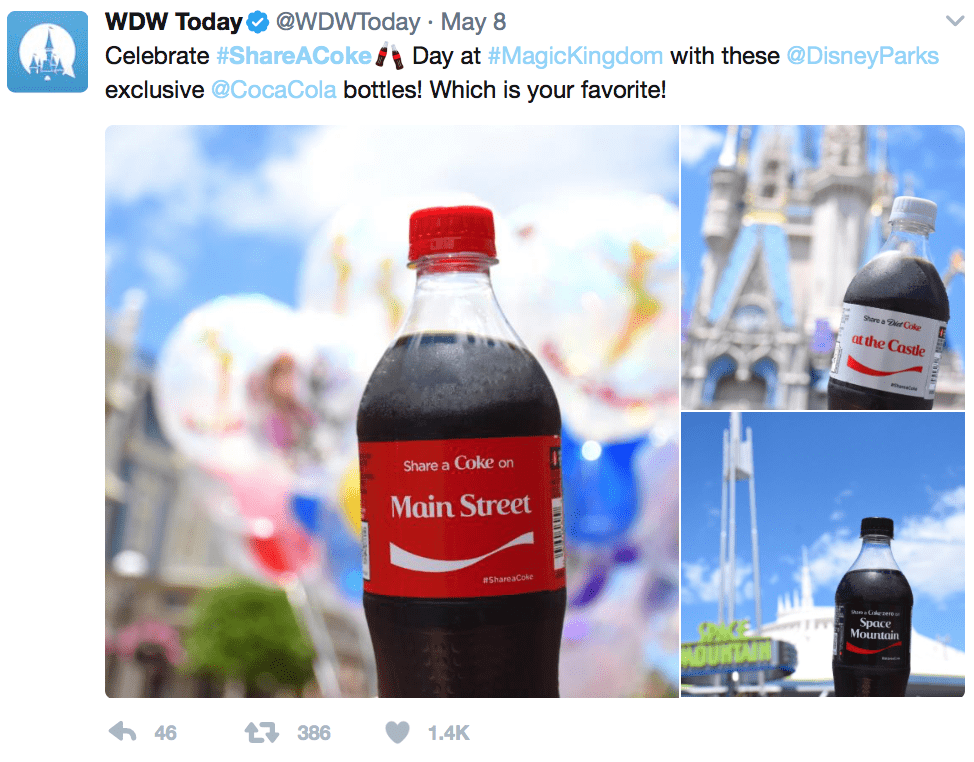
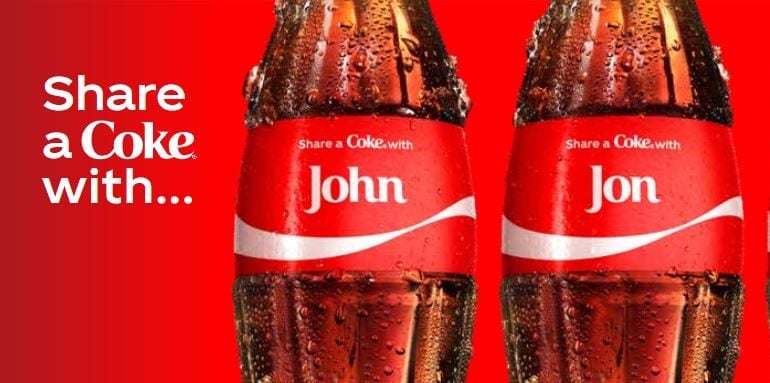
The share a coke campaign involved coke changing the original, traditional wrapper of the coke bottle to say "share a coke with.." and then a popular name. The purpose of this campaign was to create a more personal relationship with the consumer and to inspire people to share happy moments. The main objective of the campaign was to increase the consumption of coke over the summer period. Another objective was to get people talking about coke again, and to get people excited about it. The campaign needed to make consumers see coke in a different way, not only just consume the product, but also to love the brand. The advert is aimed at both males and females who are wanting to spend time with each other.

Target audience
The aim for "Share a coke"was to try and make a way for teenagers to connect and engage with millennials. I would not say there is a specific target audience for the share a coke campaign, it was just an overall campaign for anyone wishing to have a good time or meet up with people and enjoy themselves. The "share a coke" campaign is aimed at both males and females who are wanting to meet up with their friends and family to share a coke with them. The Coca-Cola company knew that they needed to innovate and by creating this campaign they could target a more specific audience. Although they are still targeting all Coca-Cola consumers, this campaign was more geared towards the millennial's due to the fact that they could personalise what they were drinking and then post it on social media. The goal of the campaign was to get people talking about Coke, brining people together, and reintroduce their new label and idea, and with this age group, they would be able to help spread this image.

Key messages
"Share a cokes" USP would be that each individual bottle is personalised by having their name on the bottle. If you could not find your name on a bottle in stores, you could go online to personalise a limited edition glass bottle of coke with your name on. This encouraged a lot of people to get involved as they felt special by having a limited edition bottle with their name on.
Approach
'Share a Coke' used celebrity endorsement to help share their campaign idea. By involving celebrities, you are more likely to be noticed more because it gives a wider field for people to see your product and get involved. If you see celebrities involved, it allows you to know its reliable and is something worth trying. This helps to gain possible consumers attention as it is well known people helping to spread the awareness of something new.
Each bottle is personalised by someones name. This a very good way to get across to people because they have a reason to get involved and it allows them to feel like it is something personalised just for them. As you can also personalise your own bottle online with what you wish to say, this makes it even more personalised to you and can make you feel important and special for having this, or for giving it as a gift for someone else.
Each bottle is personalised by someones name. This a very good way to get across to people because they have a reason to get involved and it allows them to feel like it is something personalised just for them. As you can also personalise your own bottle online with what you wish to say, this makes it even more personalised to you and can make you feel important and special for having this, or for giving it as a gift for someone else.

Representation
There is not much, if not any at all, stereotyping within the "Share a coke" campaign, however you could say that it is stereotyping the fact that teenagers are always out together and don't spend a lot of time with their families at home. This is typically what people believe is what teenagers do on a regular basis, so could feel this advert is justifying their opinions of young people.
It is aimed at a range of people, races genders etc. so it is not leaving anyone out and everyone feels included. The only issue with this campaign is that a majority of the advertising for the campaign is done over social media, which means a large amount of people may not see this due to not being on various social medias. However the hashtag and sharing of the campaign was done over different social medias, such as Instagram, snap chat and Facebook, which each has a variety of ages on, meaning it reaches a larger range on people.

Campaign logistics
The campaign was first launched in Australia in 2012 and then later in Britain in 2013. The 'Share a coke' campaign was launched during the summer. This was done because it is a cold refreshing drink, but as well as this, it is a time where people and friends get together and spend time with each other. This means it is a popular time in which people are more likely to get involved and purchase their products.
The campaign was carried out over a wide range of media. More emphasis was put on the broadcast media and internet with the aim of reaching a wider audience. The Cokes marketing Communications were effective in that it was successful in making customers feel valued and cared about.
Choice of media
Choice of media
Social media played a huge role in the success of the campaign. When people were successful in fining their name on the bottle, they shared their find on social media with the #ShareaCoke. This acted as an organic means of spreading brand awareness throughout social media platforms. These included Twitter, Instagram and Facebook. Friends would see each other finding their names, and drinking and enjoying their coke product, so they would be inclined to interact with the brand. Putting peoples names on the bottles, made people go out and try to find their name, which they would then go on to post on social media so they felt involved themselves. Social media has a large range of different people on it, which means the campaign was able to reach across to more people.
The campaign went beyond customised bottles. Coke created websites and interactive billboards as well as portable kiosks where could get more unique named Coca Cola products. Coke put the "Share a Coke" campaign on various channels like newspapers and Tv commercials, but the most popular channels were social media, particularly Facebook. Even people who may not particularly like Coca Cola products, were drawn to buying the personalised "Share a Coke" products, because it was specific to them. When and or if peoples family members and friend's brought a personalised product, it encouraged people to get one swell to feel more included and involved.
.png)
Call to action
The call to action Coca-Cola created for the campaign was very powerful. The campaign name "Share a coke" was their call to action for the whole campaign. This made people purchase the personalised "Share a coke" products and share the memorable moments with their family and friends on social media. The "Share a coke" slogan is a call to action to buy more personalised products. The slogan is easy to remember and is very catchy, the phrase was a reason to buy a bottle and be involved with the campaign, which gave another purpose to the product.
Relevant legal and ethical issues and regulatory bodies
An Arab-Israeli citizen sent a legal petition to an Israeli court calling the campaign discriminatory. He pointed out that not one Arabic name appears among the popular Israeli names identified by the drinks giant, even though Israels Arab population numbers more than 1.5 million. Printing the name Muhammad, the Islamic prophet, on a plastic drink bottle could also offend religious sensitives; some Muslim consumers could consider it inappropriate to print the name on a consumer product and especially to throw it out when it is finished.
Relevant legal and ethical issues and regulatory bodies
An Arab-Israeli citizen sent a legal petition to an Israeli court calling the campaign discriminatory. He pointed out that not one Arabic name appears among the popular Israeli names identified by the drinks giant, even though Israels Arab population numbers more than 1.5 million. Printing the name Muhammad, the Islamic prophet, on a plastic drink bottle could also offend religious sensitives; some Muslim consumers could consider it inappropriate to print the name on a consumer product and especially to throw it out when it is finished.
.
It is also possible that there were some legal issues and challenges related to the names used in the campaign, for example, if some people felt offended by the use of their name, or if there were some legal issues related to the use of a specific name, such as a trademark violation, or a name that could be with associated religious or historical figure.
It is also possible that there were some legal issues and challenges related to the names used in the campaign, for example, if some people felt offended by the use of their name, or if there were some legal issues related to the use of a specific name, such as a trademark violation, or a name that could be with associated religious or historical figure.
An ethical issue that must be considered is the impact of the campaign is on the environment. The "Share a Coke" campaign used personalised plastic bottles, instead of glass bottles which could have a large negative impact on the environment if not managed responsibly.
Second campaign
Deadpool
Aims and objectives
The main objective and aim for the Deadpool campaign was to get it out there and viewed by many people, which they succeeded very well with this as you couldn't spend two seconds on social media, the internet, reading a magazine, watching YouTube, watching TV, watching Youtube, walking down the street or even on dating apps like Tinder with out seeing Ryan Reynolds in the red skintight Deadpool suit.This is exactly what the marketing team were going for, so that absolutely everyone new about the upcoming movie.
.png)
Target Audience
The age rating that BBFC gave the Deadpool film was a 15. This is perfect as out fits well with their target audience as they used a lot of social media from twitter to Tinder. 98% of people aged between 16 and 24 have a social media account, which is where Deadpools marketing targeted the most. The marketing team highlighted early on that the majority of their target audience was male, with 62% of ticket buyers being male which proves their point.
Because of this the Deadpool marketing team choose a topic which is a common problem amounts you men, which is not checking their testicles for testicular cancer, which they used to promote the film with a video on YouTube title "Gentlemen, Touch Yourself Tonight" to check themselves for testicular cancer.

Another way the Deadpool team targeted the male audience was by creating Deadpool a tinder account. The ration of men to women on tinder is 9:1, with 35% of those men are in the target audience of 18-24, making it a great way for the Deadpool team to advertise.
Key messages
The Deadpool marketing team wanted to create a certain relationship between the character and audience. The relationship that was crated is comical and exemplifies the characteristics on the funny Deadpool character. This was the main USP for the marketing campaign because it was too show of the comic accurate parts of the Deadpool character by confirming that accurate suit he will be wearing, which created a message to the fans that the character will finally be done justice after the x-men origins awful presentation of his character.
Approach
An approach which the Deadpool marketing team took was the use of shock advertising, which we can especially see through the testicular cancer advert. The title of the advert definetly turns the audiences heads and the way they integrated it into the campaign was smooth and seamless. Because of the title of the video put on YouTube which was "Gentlemen Touch Yourself Tonight" some people may have been cautious to click on the video, due to being shocked by the title. Shock advertising is a very effective way of grabbing the attention of the consumer, as it makes them question how the should think and react by the media they are consuming. It is meant to deliberately shock the consumer in ways that offend viewers and by violating social norms and consumers personal ideas and thoughts. The Deadpool marketing team have done this by shocking customers with advertisements the release.
Representation
The Deadpool adverts represent him as a character who is funny, who makes jokes and makes fun of other films and rival companies. This goes against the normal stereotype for a superhero who is meant to be honourable and respectful of others, something which Deadpool is not, which we can see in the Green lantern advert which started Ryan Reynolds, the actor of Deadpool, which Deadpool goes on to mimic in an advert for the upcoming film.
Campaign Logistics
The timings of the adverts were incredibly important in the marketing campaign for Deadpool and for the success of the campaign, due to lots of the adverts were placed around seasonal times in the year. There has been multiple adverts like this, one of which was a Valentines day themed advert, which made the Deadpool film look like a love story and had the tagline "True love never dies". We also saw a Christmas themed advert where Deadpool replaced Santa, and the tag line was "Sit on this Deadpool". This had a very different tone and was more orientated to Deadpool, opposed to the valentines day advert.
Choice of Media
The Deadpool advertising team used multiple different media types which were through: social media, Tv interviews, an app, online video adverts, billboards, print, DVD covers and film trailers. There are a lot of examples within each choice, with some being more obvious than others. The use of each differs because of the marketing being predominantly being the use of social media and online video adverts, which they used to their advantage with more traditional forms of advertising being used, which were very unique and hadn't been seen before. An example of a unique traditional way of advertising we saw for the Deadpool movie is that they changed the front covers of DVD's so that Deadpool was on the front cover of it. This took advantage of DVD displays for unique, effective exposure for the film.

Call to action
We saw the call to actions mainly on billboards and print adverts, which said "in cinemas 12th February". These were used more on the billboards and prints specifically, instead of the digital adverts, because to is more traditional to do so. These were only seen on the traditional adverts, the DVD cover stands of Deadpool, as mentioned previously, did not have this. This was original, and printing Deadpools face on every single film possible was never seen before.
Legal and Ethical issues:
There were some licensing issues over the Deadpool character because it was believed that Marvel owned the rights to the character. However in the early 90s, Marvel sold the rights to the character, meaning they no longer had the rights over the character. Because of this 20th century fox could use the character however the pleased, also meaning the character could be used in all the adverts that the company produced.
Another issue with the Deadpool campaign was censorship within the adverts, even though the majority of the adverts were family friendly and clean, some adverts came under the "Red band" even though they were uncensored, some platforms made it so they had to have a minimum age rating to be on their platform. Therefore the Deadpool marketing team had to figure something out to sort this issue, so in the end they ethical team set a minimum age of 18.
Regulatory bodies:
The office of communications (OFCOM) would be a regulatory body that would have controlled what adverts Deadpool were allowed to publish, specifically on TV. This is due to OFCOM monitoring content on TV, as well a radio but there was no radio content produced for Deadpool.
The Advertising Standards Authority (ASA) is one of the main regulatory bodies that controlled what Deadpool was allowed to make public. This is due to the ASA regulating all adverts that are produced across many different mediums, like print, billboards and more.
The World Wide Web Consortium (W3C) would be another regulatory body that the Deadpool team would have been aware of. They make sure that all content put on the internet is deemed acceptable, as well as providing standards for how music and images can be used on the internet.
M1: Evaluating different cross media advertising campaigns for consistency of message.
Share a coke
The "Share a coke" campaign was open and available to a variety of people, especially through its choice of media links. They used a hashtag for their product on social media like Instagram, snapchat, Facebook and Twitter. The use of the hashtag was very effective because it was easily memorable and very easily shared. This hashtag was used over multiple social media apps, which made it easy to reach a whole wide range of people who are using the apps. Coke continued to post the hashtags on their campaigns, wether it was on the end of a tv advertisement or on twitter, or even on the drinks fridges where people grab the drink from to go buy it. The hashtag was seen everywhere, and it was also seen constantly with the colour red, which made it more memorable for the consumer.
The "Share a coke" campaign was open and available to a variety of people, especially through its choice of media links. They used a hashtag for their product on social media like Instagram, snapchat, Facebook and Twitter. The use of the hashtag was very effective because it was easily memorable and very easily shared. This hashtag was used over multiple social media apps, which made it easy to reach a whole wide range of people who are using the apps. Coke continued to post the hashtags on their campaigns, wether it was on the end of a tv advertisement or on twitter, or even on the drinks fridges where people grab the drink from to go buy it. The hashtag was seen everywhere, and it was also seen constantly with the colour red, which made it more memorable for the consumer.
The "share a coke" campaign used celebrity endorsement to help promote the product and the campaign. They did this buy sharing photos of the celebrities with a bottle of coke with their names on it. The use of celebrities make the audience want to buy the product more as they feel the product will be more reliable and the product is worth trying if they see their favourite celebrities with the product. The use of celebrity endorsement was very consistent throughout the whole campaign, we saw stars such as Selena Gomez, Taylor Swift and many other famous film stars. This brought many new people to be the product, because they trust the famous people they see drinking the product.
Another thing we saw that was consistent in the campaign was the colour scheme. It was usually red and white which we saw consistently on a range of adverts: including social media posts, billboards and TV adverts. The colour scheme was so consistent that you couldn't see coke without thinking of red and white.
Deadpool
We see consistency in the deadpool character through the advertising campaign which created a connection between the character and the audience. Ryan Reynolds used his platform to promote the film to all his loyal fans through social media which showed high share-ability. This was very consistent across all of the adverts due to Deadpool and Ryan Reynolds being incredibly prominent in people buying tickets for the film, which created a very consistent use for the movie.
The consistency superhero theme for the film acts as the USP and makes the audience want to go ahead and buy a ticket. This film appealed to young adults, particularly young males due to the crude humour in some of the adverts. The humour is generally consistent through a lot of the adverts across all platforms.
There was also a consistent colour scheme used for all the Deadpool advertisements which was red and black, the same colour as the Deadpool superhero suit. We saw the colour schemed used in text as the red was used to highlight a specific word, which made it stand out from the black text on the rest of the advert. This was very consistent across all the adverts.


Comments
Post a Comment